

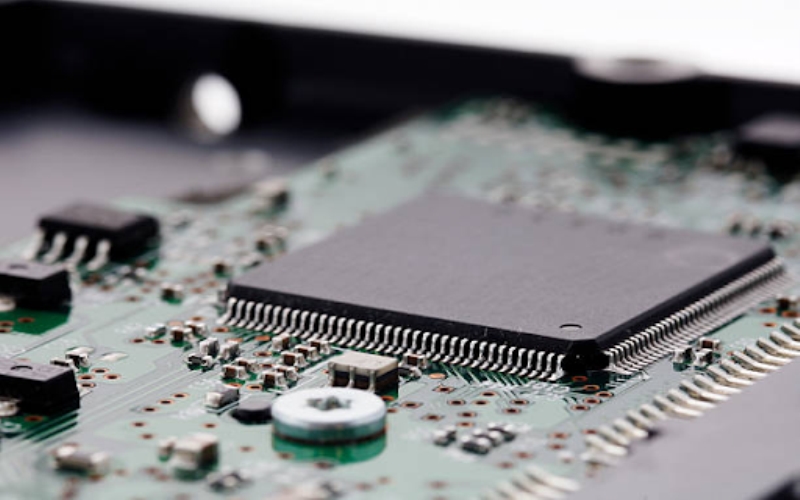
In the rapidly evolving landscape of information technology, the quest for faster, more efficient computing has led to groundbreaking innovations. Among these, quantum technologies have emerged as a promising frontier, poised to revolutionize various facets of computing. One area where quantum technologies are making a significant impact is in integrated circuit (IC) chip design. This article explores the quantum leap in IC chip design, delving into the applications, challenges, and the potential transformative effects on the semiconductor industry.
Introduction to Quantum Technologies in IC Chip Design
The traditional binary system, based on bits that represent either a 0 or a 1, is the foundation of classical computing. Quantum computing, on the other hand, leverages the principles of quantum mechanics to use quantum bits or qubits. Unlike classical bits, qubits can exist in multiple states simultaneously, thanks to a phenomenon known as superposition. This unique characteristic allows quantum computers to process complex calculations exponentially faster than classical computers.
Applications in IC Chip Design:
- Optimization Algorithms: Quantum computing excels in solving optimization problems, a critical aspect of electronic parts supplier’s IC chip design. It can efficiently explore a vast solution space to find optimal configurations, leading to enhanced performance and energy efficiency.
- Molecular Simulation: Quantum computers can simulate the behavior of molecules with unprecedented accuracy. This capability is invaluable in designing semiconductor materials with specific properties, contributing to the development of advanced ICs.
Quantum-Inspired Algorithms for IC Design
While true quantum computers are still in the early stages of development, researchers are exploring quantum-inspired algorithms that can be run on classical computers to improve IC chip design processes.
Quantum-Inspired Machine Learning:
- Machine learning algorithms inspired by quantum principles, such as quantum annealing, are being employed for tasks like pattern recognition and optimization in chip design.
Hybrid Approaches:
- Combining classical and quantum computing elements in hybrid approaches can harness the strengths of both, addressing specific challenges in IC chip design with greater efficiency.
Challenges and Solutions in Implementing Quantum Technologies
Despite the immense potential, integrating quantum technologies into IC chip design poses several challenges. However, ongoing research and technological advancements are paving the way for solutions.
Quantum Decoherence:
- Qubits are susceptible to decoherence, where external factors disrupt their quantum states. Developing error-correction techniques and fault-tolerant quantum gates is crucial to mitigating this challenge.
Scalability:
- Building large-scale quantum computers suitable for complex IC chip design tasks requires overcoming scalability issues. Researchers are exploring scalable architectures and improving qubit connectivity.
Quantum Software Development:
- There is a shortage of quantum programmers skilled in developing software for quantum computers. Initiatives to educate and train professionals in quantum programming languages are underway to address this gap.
Quantum-Inspired Tools in IC Chip Verification and Validation
Ensuring the reliability and functionality of IC chips by any integrated circuit distributor is a critical aspect of semiconductor design. Quantum-inspired tools are being developed to enhance the verification and validation processes.
Quantum Random Number Generators:
- Quantum-generated random numbers are inherently unpredictable, providing a robust foundation for cryptographic applications and enhancing the security features of IC chips.
Quantum Key Distribution (QKD):
- QKD, enabled by quantum technologies, offers a secure method for key exchange, bolstering the overall cybersecurity of IC chip communications.
Quantum Computing Companies and Collaborations in IC Chip Design
Several companies are at the forefront of incorporating quantum technologies into IC chip design. Collaborative efforts between quantum computing companies and semiconductor giants are accelerating progress in this domain.
IBM and Rigetti Computing:
- IBM, a pioneer in quantum computing, is collaborating with Rigetti Computing to explore quantum algorithms for optimization problems in semiconductor manufacturing, streamlining IC chip design processes.
D-Wave and Intel:
- D-Wave, known for its quantum annealing technology, is working in collaboration with Intel to develop hybrid quantum-classical systems for applications in materials science, including semiconductor research.
Future Outlook and Transformative Effects
The integration of quantum technologies into IC chip design holds the promise of transformative effects on the semiconductor industry.
Increased Computational Speed:
- Quantum computers, once fully realized, are expected to outperform classical computers in solving complex problems, leading to a significant increase in computational speed for IC chip design tasks.
Energy-Efficient Designs:
- Quantum algorithms’ ability to optimize solutions can result in the creation of energy-efficient IC chip designs, reducing power consumption and environmental impact.
Accelerated Innovation:
- Quantum technologies in IC chip design are likely to accelerate the innovation cycle, enabling faster development of cutting-edge semiconductor devices with enhanced capabilities.
Conclusion:
As we navigate the quantum landscape in IC chip design, the synergy between classical and quantum computing approaches becomes increasingly apparent. The quantum leap in semiconductor technology holds the potential to redefine the limits of computational power, ushering in a new era of innovation and efficiency. As researchers continue to overcome challenges and industry collaborations flourish, the transformative effects of quantum technologies on IC chip design are poised to shape the future of information technology. Embracing this quantum leap is not just a technological evolution but a paradigm shift that will undoubtedly leave an indelible mark on the semiconductor industry.